

Caregiver burnout is the physical, emotional, and mental exhaustion that builds when you spend months or years helping an aging parent without enough support or relief. It shows up as constant fatigue, irritability, trouble sleeping, pulling away from friends, and neglecting your own health. If caring for your parent has started to feel less like something you choose to do and more like something that’s slowly consuming everything else, what you’re feeling has a name.
At Seniors Helping Seniors® Suncoast, we work with families across Sarasota and Bradenton who have reached that point. Most families who contact us for family caregiver support have been pushing through burnout for weeks or months before making the call. According to AARP and the National Alliance for Caregiving, 63 million Americans are currently providing unpaid care, with 47% caring for a parent or parent-in-law. Most are doing it on top of a job, their own family responsibilities, and very little outside help.
What Is Caregiver Burnout?
Caregiver burnout is a state of chronic exhaustion that develops when the demands of caregiving exceed your capacity to handle them. It is not a medical diagnosis the way depression or anxiety are. It’s a widely recognized pattern that Cleveland Clinic, Mayo Clinic, and the Alzheimer’s Association all describe as physical, emotional, and mental exhaustion accompanied by withdrawal, anxiety, sadness, and declining health.
Burnout doesn’t happen because you’re doing something wrong. It happens because you’re doing too much for too long without enough support. In a region like Sarasota County, where nearly 39% of residents are 65 or older, the demand on family caregivers is especially high.
How Common Is Caregiver Burnout?
AARP and the National Alliance for Caregiving’s Caregiving in the U.S. 2025 report shows how widespread the problem is:
| Statistic | Figure |
| U.S. adults currently caregiving | 63 million |
| Average caregiver age | 51 years old |
| Average weekly hours spent caregiving | 27 hours |
| Providing 40+ hours per week | 24% |
| In high-intensity caregiving situations | 44% |
| Working-age caregivers also holding a job | 70% |
| “Sandwich generation” (caring for parent + raising children) | 29% |
AARP’s 2026 valuation report puts the scale into perspective: 59 million Americans caring for adults provided an estimated 49.5 billion hours of care in 2024, valued at $1.01 trillion. That figure exceeds total U.S. Medicaid spending for the same year. If caregiving has started to feel like a second full-time job, the data confirms that for many families, it literally is one.
Signs of Caregiver Burnout
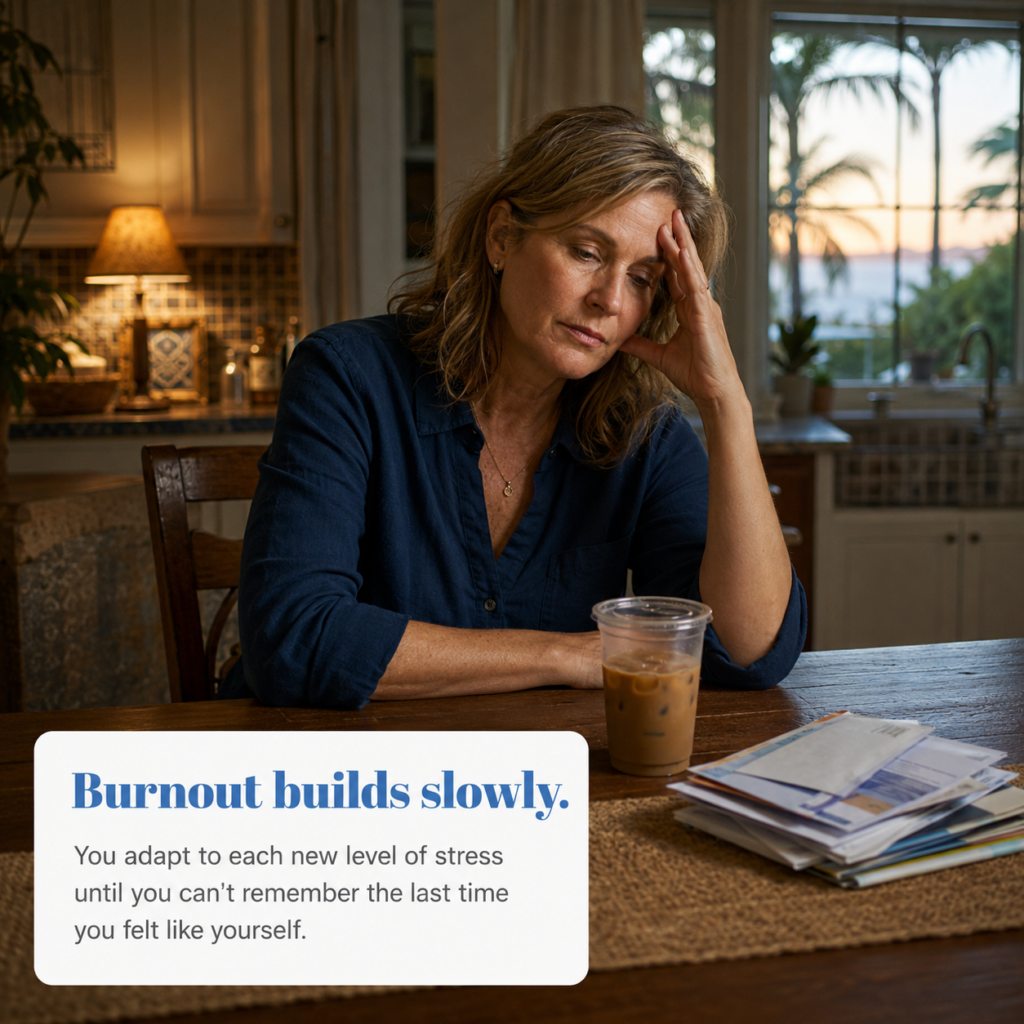
Burnout doesn’t arrive all at once. It builds gradually, which is part of why it’s so easy to miss. You adapt to each new level of stress until you realize you can’t remember the last time you felt like yourself.
According to Cleveland Clinic and Mayo Clinic, the most common signs include:
Emotional signs:
Constant worry or anxiety about your parent’s condition Irritability or snapping at family members Feeling helpless, hopeless, or trapped Loss of interest in activities you used to enjoy Persistent sadness or crying more than usual Resentment toward your parent or family members who aren’t helping
Physical signs:
Exhaustion that sleep doesn’t fix Getting sick more often Headaches, body aches, or unexplained pain Sleeping too much or too little Weight changes without trying Skipping your own medical appointments
Behavioral signs:
Withdrawing from friends, social events, or hobbies Relying more on alcohol, food, or other coping habits Losing patience with the person you’re caring for Feeling like you have nothing left to give
You don’t need to check every box. If several of these sound familiar, burnout is likely already affecting you.
What Causes Caregiver Burnout
Burnout rarely has a single cause. It’s usually several pressures compounding over time until something gives.
Too Many Hours with Too Little Help
The more hours you spend caregiving, the higher your risk of burnout. According to the 2025 AARP/NAC report, 40% of caregivers live with the person they’re helping. Those caregivers provide more hours while receiving less help from both family and paid providers. When you’re the one who’s always there, you’re also the one who never gets a break.
No Choice in the Role
Not everyone chooses to become a caregiver. Sometimes the role lands on you because you live closest, you’re the only daughter, or there’s simply nobody else. The 2025 AARP/NAC report found that 56% of caregivers said they had no choice in taking on the role. Those caregivers reported an average of 8 poor mental-health days per month, compared to 4.5 for those who felt they had a choice. They were also nearly three times as likely to feel isolated.
Financial Pressure
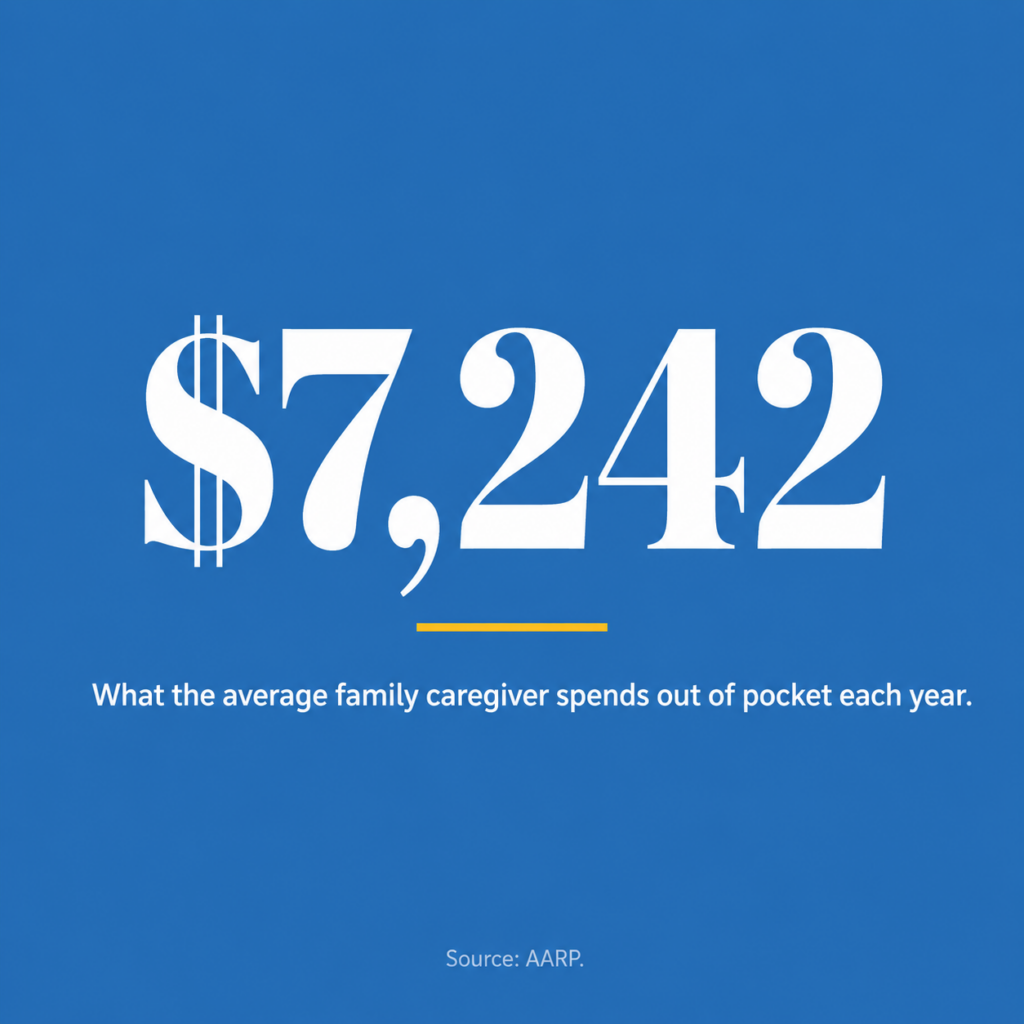
Caregiving costs money, and the financial strain compounds everything else. AARP research shows that family caregivers spend an average of $7,242 per year in out-of-pocket costs, about 26% of their income. That includes gas, supplies, medications, missed work, and the constant small expenses that pile up week after week.
The Guilt Trap
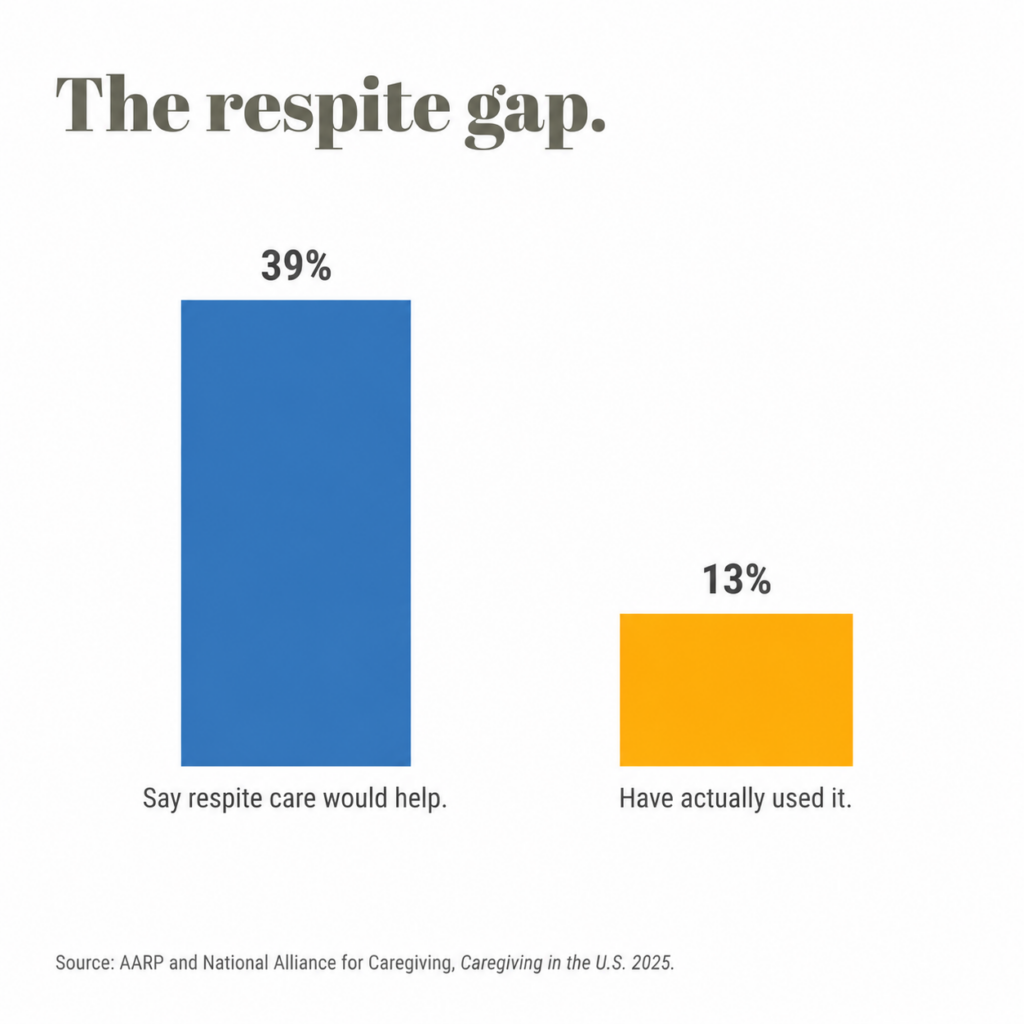
This one keeps people stuck. You know you need help, but asking for it feels like admitting you can’t handle it, or worse, like you’re letting your parent down. In the AARP/NAC 2025 report, 39% of caregivers said respite services would be helpful, but only 13% had actually used them. The gap between knowing you need a break and actually taking one is almost always filled with guilt.
Caregiving Without Enough Support
Many caregivers carry the weight without meaningful help from siblings, extended family, or professional services. When one person absorbs all the physical labor, emotional burden, decision-making, and scheduling, burnout becomes less of a possibility and more of a countdown.
Why Dementia Caregiving Burns Families Out Faster
If your parent is living with dementia or Alzheimer’s disease, the caregiving burden is typically heavier, more emotionally complex, and more isolating. The care doesn’t ease up over time. It intensifies.
According to the Alzheimer’s Association, nearly 12 million caregivers provided 19 billion hours of unpaid care to people with Alzheimer’s or other dementias in 2024. The average dementia caregiver provides about 31 hours of care per week, compared to the overall average of 27. Among employed dementia caregivers, 57% reported going in late, leaving early, or taking time off work.
The Family Caregiver Alliance notes that a person caring for someone with dementia is twice as likely to suffer from depression compared to someone providing care for a person without dementia. Out-of-pocket costs run significantly higher, too: the Alzheimer’s Association estimates that dementia caregivers spend nearly double what non-dementia caregivers spend each year.
We see this play out with families across Sarasota and Bradenton. Families caring for a parent with dementia often need dementia support services sooner than they expected. Not because they failed at caregiving, but because the demands of dementia caregiving are uniquely intense.
Caregiver Burnout vs. Depression
Burnout and depression overlap, but they respond differently to change. The core distinction:
| Caregiver Burnout | Clinical Depression | |
| Primary driver | Sustained caregiving stress without relief | Clinical mood disorder |
| Response to a break | Symptoms tend to improve when caregiving demands ease | Symptoms may persist even with rest and time away |
| Prevalence among caregivers | Affects the majority at some point | 25.6% lifetime diagnosed rate among caregivers (CDC), vs. 18.6% for noncaregivers |
| Frequent mental distress | Tied to caregiving load | 20.5% of caregivers vs. 13.6% of noncaregivers (CDC) |
Both can happen at the same time. If the sadness, hopelessness, or loss of interest won’t ease up even when you do get a break, talk with your doctor or a mental health professional. Getting the right support starts with knowing which one you’re dealing with.
What Happens When Burnout Goes Unaddressed
Pushing through burnout doesn’t make it go away. Chronic caregiving stress takes a measurable toll on your health and, ultimately, on the quality of care your parent receives.
The Toll on You
The 2025 AARP/NAC report found that among family caregivers:
64% report moderate to high emotional stress 45% report moderate to high physical strain 23% say caregiving has made it difficult to care for their own health 20% rate their health as fair or poor 24% say they feel alone
Caregivers averaged 7 days per month of poor mental health and 5.4 days per month of poor physical health. A 2023 review in the journal Maturitas linked sustained caregiving stress to immune problems, cardiovascular disease, metabolic issues, and cognitive decline.
The Toll on Your Parent
When the caregiver is burning out, the person receiving care feels it too. The Alzheimer’s Association reports that caregiver distress is associated with increased odds of residential care placement, worsened behavioral symptoms, greater likelihood of abuse, and higher hospitalization risk for the care recipient.
Getting help protects both of you.
What to Do About Caregiver Burnout
There’s no single fix, but the most effective approach combines practical changes to your routine with outside support. These strategies work.
Ask for Specific Help
Vague requests (“I could use some help”) are easy for family members to dodge. Specific ones aren’t. Instead of “Can you help more?”, try “Can you take Mom to her appointment on Thursday?” or “I need someone to handle grocery shopping this week.” People step up more often when they know exactly what’s needed.
Set Boundaries Around Your Time
You cannot be available 24 hours a day, 7 days a week without consequences. Set specific hours when you’re on and times when you’re not. Communicate those boundaries to your parent, your siblings, and yourself. A boundary is not abandonment. It’s the thing that allows you to keep showing up.
Stay Connected to Your Own Doctor
Caregivers have a well-documented pattern of canceling their own medical appointments. Don’t. Your health is the foundation everything else rests on. Make and keep your own appointments, and be honest with your doctor about how caregiving is affecting you.
Join a Caregiver Support Group
Talking with other people who understand what you’re going through provides relief that friends and family sometimes can’t. The Alzheimer’s Association and Family Caregiver Alliance both offer caregiver support groups, many of which meet virtually.
Accept That Asking for Help Is Not Failure
This is worth saying directly: needing help does not mean you’re not a good son or daughter. It means the job is bigger than one person. AARP’s data shows that 51% of caregivers find meaning and purpose in their role even while reporting high emotional stress. You can love your parent, find purpose in helping them, and still be burned out. Those things coexist all the time.
Consider Professional Respite Care
Professional respite care gives family caregivers time to rest, handle their own needs, or step away for a few hours while a trained caregiver provides support at home. The National Institute on Aging describes respite care as short-term relief for family caregivers. The Administration for Community Living calls it an essential component of home- and community-based support. It is a recognized intervention, not a luxury or a last resort.
Research supports what we see with families every day: respite care works best when it’s consistent, when the caregiver is trustworthy and experienced, and when the service is flexible enough to fit the family’s actual schedule.
How In-Home Respite Care Works
For families in Sarasota and Bradenton, in-home respite means a caregiver comes to your parent’s home so you can take a break. It can be a few hours a week or continuous coverage around the clock, depending on what you need.
At Seniors Helping Seniors, we approach respite differently because of our peer-to-peer model. Our caregivers are experienced, mature adults who share generational common ground with the people they care for. That matters for respite because the biggest barrier to taking a break is not trusting the person who’s filling in. When your parent is spending time with someone who understands their world, someone who remembers the same things they remember, the family member can actually step away without the phone ringing every 20 minutes.
A few things families should know about how we handle respite care:
Consistency matters. We track the Continuity of Care Index, which measures whether the same caregivers are consistently assigned to the same clients. Your parent sees familiar faces, not a rotating lineup of strangers.
We can usually start quickly. From first call to active care, the typical timeline is 48 hours to one week.
It may be covered. We’re contracted with the VA, Medicare Advantage plans (including Humana, UnitedHealthcare, Aetna, Longevity Health Plan, and Ultimate Health Plans), PACE, and several Florida Department of Elder Affairs programs (CCE, ADI, HCE, and OAA Title III-E). Eligible veterans and qualifying enrollees may receive services at zero out-of-pocket cost. More details are available on our paying for home care page.
Respite care can cover any of the services a family caregiver would normally handle, including homemaker services like meal prep and housekeeping, companion care for socialization and engagement, and personal care for bathing, dressing, and mobility assistance.
Most families start with a short 10 to 15 minute call to talk through their situation and see whether the service is the right fit, with no obligation to move forward.
Caregiver Support Resources in Sarasota and Bradenton
Whether or not you’re ready for professional care, these organizations can help.
National resources:
Eldercare Locator (Administration for Community Living): 1-800-677-1116 AARP Caregiving Resource Center Caregiver Action Network: National Caregiver Help Desk Family Caregiver Alliance: Caregiver resource library National Institute on Aging Caregiving Toolkit
Florida resources:
Florida Department of Elder Affairs: Caregiver support programs including RELIEF Program respite, Title III-E, HCE, and ADI respite Florida Elder Helpline: 1-800-963-5337
Sarasota and Manatee County resources:
Area Agency on Aging for Southwest Florida (serves Sarasota County): 866-413-5337 Manatee County Aging Services: 941-742-5818
Manatee County specifically lists respite care among its aging-services programs, describing it as supervision and companionship designed to periodically relieve the primary caregiver.
Getting Help Starts with One Call
If you recognized yourself in this article, that recognition is the first step toward something changing.
Most families we work with start with a short call to talk through their situation and figure out whether outside support makes sense. There’s no obligation to move forward, and the conversation itself often helps clarify what kind of help would make the biggest difference.
Visit our contact page or call to get started. We serve families throughout Sarasota, Bradenton, Siesta Key, Venice, Lakewood Ranch, Palmer Ranch, and Palmetto.
Seniors Helping Seniors Suncoast, 6901 Professional Pky E, Suite 266, Sarasota, FL 34240, 941-877-1000
Each Seniors Helping Seniors® office is independently owned and operated.