

In-home dementia support provides supervision, companionship, and daily assistance so that a person with cognitive decline can remain safe and comfortable in their own home instead of moving to a facility. For most families in the Sarasota and Bradenton area, it starts with a few hours a week of companion care or help with household tasks and gradually expands as needs change. At Seniors Helping Seniors® Suncoast, we track the Continuity of Care Index to make sure the same caregivers stay with the same clients over time, which is especially important for someone with dementia because familiar faces reduce confusion and help maintain daily routines.
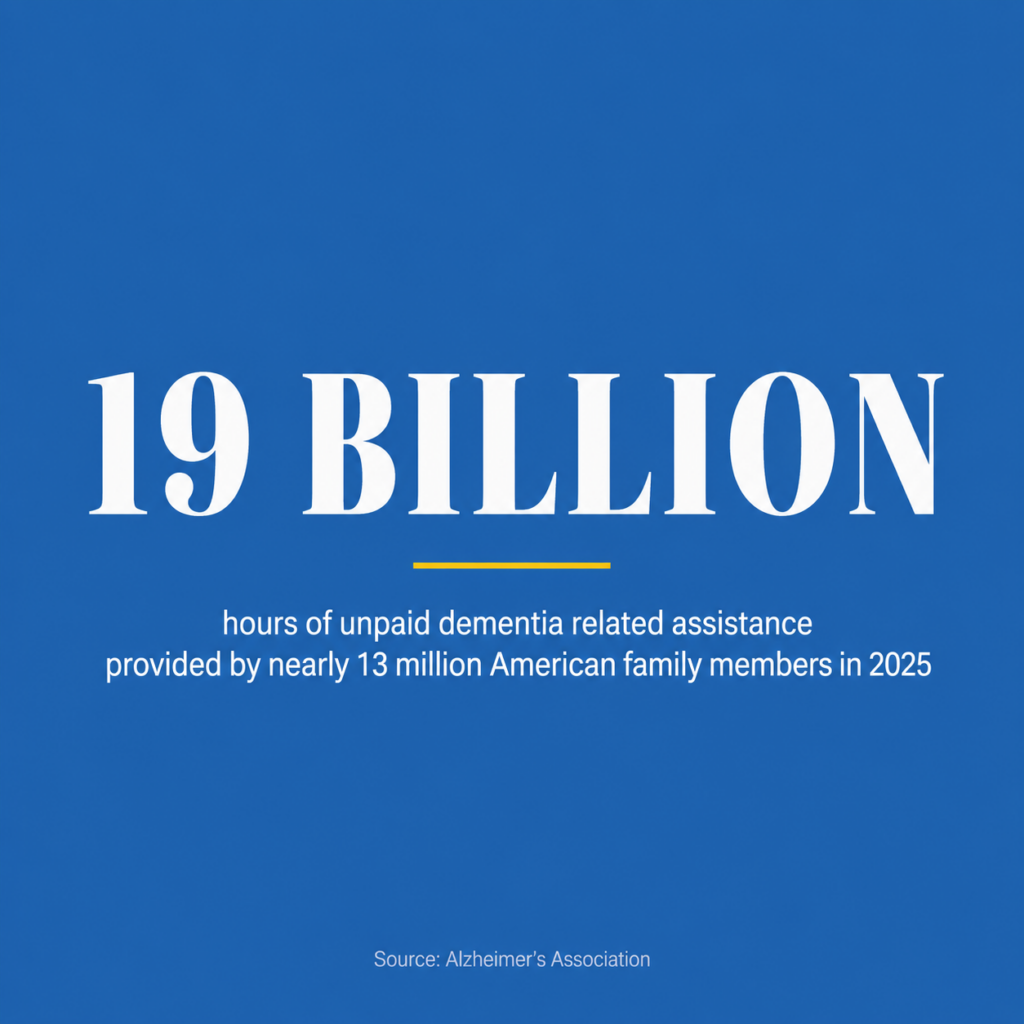
The Alzheimer’s Association estimates that 7.4 million Americans age 65 and older are living with Alzheimer’s disease in 2026, and nearly 13 million family members provided more than 19 billion hours of unpaid dementia-related assistance in 2025. Those numbers reflect a reality many families in Sarasota County and Manatee County already know firsthand: caring for a parent with memory loss is exhausting, and at some point, you need help.
What In-Home Dementia Support Actually Involves
Dementia support services at home are non-medical. Caregivers are not there to treat the disease or provide clinical interventions. They are there to keep your parent safe, engaged, and as independent as possible within their daily routine.
In practice, a typical visit might include:
Supervision and safety monitoring. Making sure your parent does not leave the stove on, wander outside, or put themselves at risk when no one else is home.
Companionship and social engagement. Conversation, card games, looking through photo albums, listening to music from their era, or going for a walk around the neighborhood. Isolation speeds up cognitive decline, and regular human connection helps counter that.
Medication reminders. Helping your parent stay on schedule with prescribed medications by providing verbal reminders and assisting with opening packaging. Caregivers cannot administer medication, but they can make sure doses are not missed.
Personal care assistance. As dementia progresses, help with bathing, dressing, toileting, grooming, and mobility becomes necessary.
Meal preparation. Cooking familiar meals, accommodating dietary needs, and making sure your parent is eating regularly.
Light housekeeping. Keeping the home clean, organized, and free of tripping hazards.
The specific mix of services depends entirely on where your parent is in the progression of their condition and what the family needs most.
How Dementia Progresses and What Support Matches Each Stage
Dementia is progressive, and the type of help that makes sense shifts as the condition changes. Most families reach out somewhere in the early-to-middle transition, often after a specific incident: a fall, a kitchen fire scare, getting lost while driving, or a noticeable decline during a holiday visit. If you are reading this because something happened that worried you, that instinct is worth acting on. The earlier support begins, the smoother the adjustment tends to be for both your parent and the caregiver.
Here is a general framework for how care needs typically line up with each stage. Every person is different, but this gives families a starting point for thinking about what their parent may need now and what to plan for next.
| Stage | What You May Notice | Typical Support |
| Early stage | Repeating questions, misplacing items, trouble managing finances or medications, withdrawing from social activities | Companion care and medication reminders a few hours per week. Help with errands, grocery shopping, and light housekeeping. A caregiver’s regular presence also gives family members early visibility into how things are going day to day. |
| Middle stage | Confusion about time or place, difficulty dressing or bathing, mood and personality changes, wandering, sundowning (increased agitation in the evening) | Daily or near-daily personal care assistance. Supervision during most waking hours. Help with bathing, dressing, meals, and mobility. Home safety modifications become important. Respite support for family caregivers who are carrying the primary load. |
| Late stage | Severe memory loss, inability to communicate, full dependence on others for all daily activities, difficulty swallowing or walking | Near-continuous or 24/7 care with rotating caregivers. Full personal care assistance. Comfort-focused support. At this stage, some families transition to facility-based memory care, but many choose to keep their parent at home with the right level of staffing. |
One thing families often underestimate is how gradually the shift happens. Your parent may be fine with a few hours of companionship for months, then suddenly need daily personal care after a hospitalization or a bad fall. Having a provider already in place, with caregivers who know your parent, makes that transition far less disruptive.
Why Caregiver Consistency Matters More Than Anything Else
When a family chooses a home care provider for a parent with dementia, most of the conversation focuses on services and pricing. Those matter. But the single factor that affects outcomes more than any other is whether the same caregivers show up consistently.
A person with cognitive decline relies heavily on routine and familiarity. When the same caregiver arrives at the same time, follows the same patterns, and has built a genuine relationship with the client, the day goes better. The client is calmer, more cooperative, and more engaged. When a new face shows up, even a well-trained one, the client may become agitated, confused, or withdrawn. For families, a revolving door of strangers is stressful. For a person with dementia, it can be destabilizing.
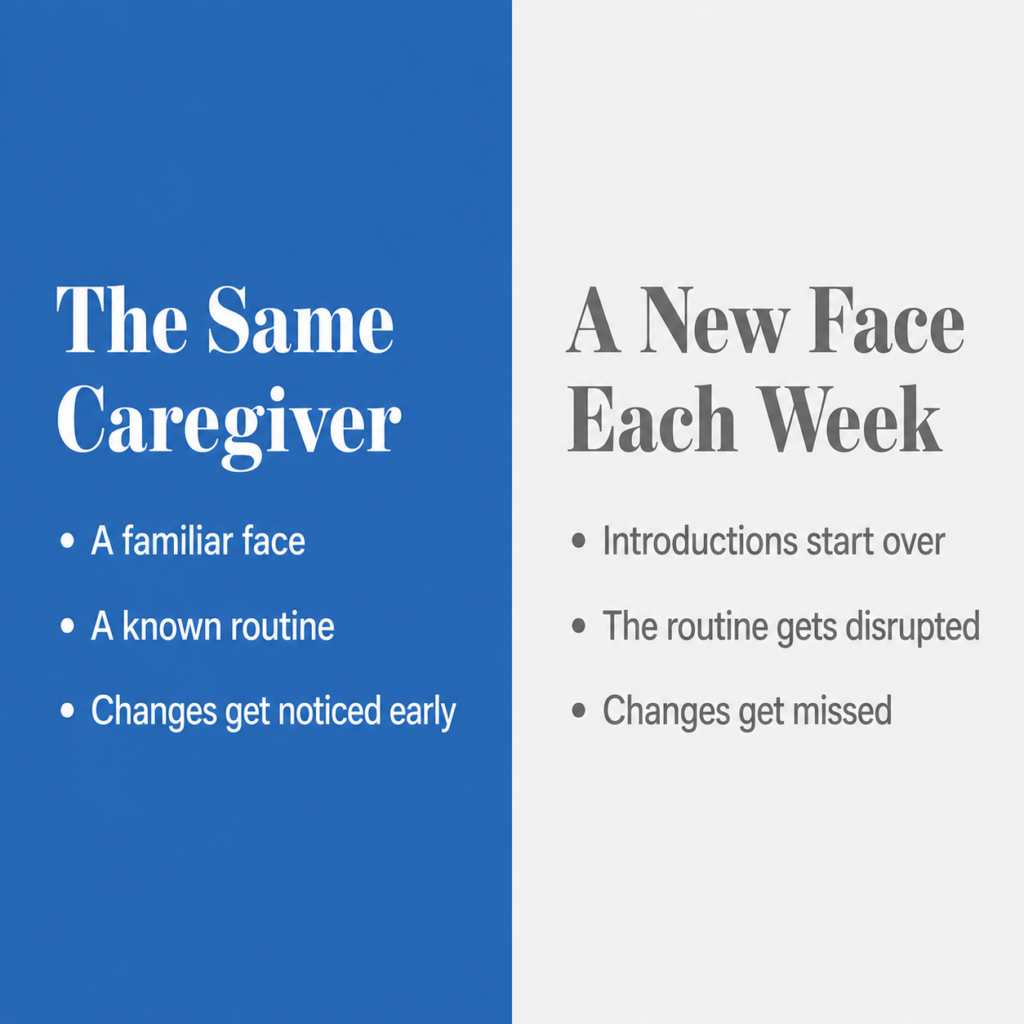
The home care industry has a well-documented problem with this. Nationally, caregiver turnover rates run between 68% and 80% annually. That means in a typical agency, most of the caregiving staff turns over within a single year. For a family dealing with dementia, that level of instability directly undermines the quality of support.
At Seniors Helping Seniors, our caregiver turnover rate is well below half the industry average. Our peer-to-peer model attracts experienced, mature adults who are genuinely drawn to this work. Many of our caregivers found their calling after caring for a spouse, parent, or family member, and they stay because the work is meaningful to them.
We also track the Continuity of Care Index (COCI), which measures whether the same caregivers are consistently assigned to the same clients over time. Most agencies do not measure this. If you are evaluating providers, ask for their COCI data. The agencies that track it tend to perform better on it, and the ones that do not track it usually cannot tell you how consistent their staffing actually is.
The Peer-to-Peer Advantage in Dementia Support
Our caregivers share generational and cultural common ground with the people they serve. For someone with dementia, that shared background is a practical tool, not just a nice quality.
A caregiver who grew up in the same era, who remembers the same music and the same cultural touchpoints, can draw on those shared memories to maintain engagement even as cognitive function changes. A conversation about a favorite song from the 1960s or a memory of a local landmark can connect with a person who may not remember what they had for breakfast. That kind of natural connection comes from lived experience, and it makes a real difference in dementia support where familiarity is everything.
Home Safety for a Parent With Dementia
Before regular support begins, our registered nurse visits the home for an approximately one-hour safety assessment. This assessment is standard for all clients, but for someone with dementia, the checklist expands to cover risks specific to cognitive decline.
Bathroom safety:
- Grab bars near the toilet and inside the shower
- Walk-in shower or shower chair (step-over tubs are a significant fall risk)
- Non-slip mats
- Water temperature settings (to prevent scalding if the person forgets to adjust)
Kitchen safety:
- Stove controls (knob covers or automatic shut-off devices)
- Sharp objects stored securely
- Cleaning products and chemicals out of reach
Wandering prevention:
- Door alarms or locks that are not easily opened
- Secure fencing if the home has a pool or pond
- Identification bracelet or GPS tracking device
General fall prevention:
- Throw rugs removed or secured
- Clutter cleared from walkways
- Adequate lighting, especially in hallways and bathrooms at night
- Cords and cables routed away from walking paths
Once regular visits begin, caregivers maintain awareness of these safety factors on every visit and flag new concerns as they come up. A caregiver who knows the home and the client well will notice when something changes, like a new piece of furniture blocking a walkway or a client who has started getting up more frequently at night.
How to Evaluate a Dementia Support Provider in Sarasota
Not all home care agencies are equipped to handle the specific demands of dementia support services in Sarasota. When you are evaluating providers, these are the questions that separate the agencies that can genuinely support your family from the ones that will leave you frustrated.
What is your caregiver turnover rate? If they cannot answer this, or if the number is above 50%, consistency is going to be a problem. The industry average is 68% to 80%.
Do you measure your continuity of care? Ask whether they track whether the same caregivers are assigned to the same clients over time. Most agencies do not.
What dementia-specific training do your caregivers receive? At Seniors Helping Seniors, every caregiver completes at least three hours of dementia and Alzheimer’s-related training before providing any support.
How do you handle caregiver matching? A good agency matches caregivers based on skill set, personality, proximity, and availability, not just whoever happens to be open.
What does your intake process include? Look for an in-home nurse assessment that evaluates both the client’s care needs and the home environment. A phone-only intake is a red flag for dementia support.
Are you contracted with the VA, Medicare Advantage, or PACE? These contracts require a credentialing process that not every agency passes. Being approved by multiple programs is a meaningful indicator of quality and reliability.
What is your background screening policy? In Florida, Level 2 screening through the Care Provider Background Screening Clearinghouse is the most thorough available. Every caregiver should be screened before providing any support.
In-Home Dementia Support vs. Memory Care Facilities
For families weighing whether a parent should stay at home or move to a memory care facility, the decision involves both cost and quality of life.
| Factor | In-Home Dementia Support | Memory Care Facility |
| Monthly cost (typical range) | Varies by hours needed. Generally more affordable than a facility up to about 10 to 12 hours of daily care, 7 days a week. | $4,500 to $7,500+ per month in the Sarasota area, depending on the facility and level of care. |
| Environment | Your parent stays in their own home with their own belongings, routines, and neighborhood. | Shared facility with other residents. Private or semi-private rooms depending on the facility and price point. |
| Caregiver consistency | Depends on the agency. At Seniors Helping Seniors, the same caregivers are assigned consistently and tracked through the COCI. | Staff rotates across shifts. Residents may see dozens of different aides over the course of a month. |
| Personalization | One-on-one care tailored to your parent’s specific routines, preferences, and needs. | Group care model. Staff-to-resident ratios vary but are rarely one-on-one. |
| Flexibility | Hours scale up or down as needs change, from a few hours a week to 24/7 coverage. | Fixed program. Moving in or out requires significant logistical effort. |
| Social interaction | Depends on the care plan. Companionship visits, outings, and family involvement are built in. | Built-in group activities and proximity to other residents. |
For most families, in-home support is the better option as long as the home environment is safe and the level of care needed does not exceed what can practically be staffed. Many clients start with a few hours a week and adjust as needs evolve.
How to Pay for In-Home Dementia Support in Sarasota
Cost is one of the biggest concerns families have, and it is also one of the areas where the most options exist. Most families pay privately, but eligible veterans and those with qualifying insurance plans may have coverage that reduces or eliminates out-of-pocket costs.
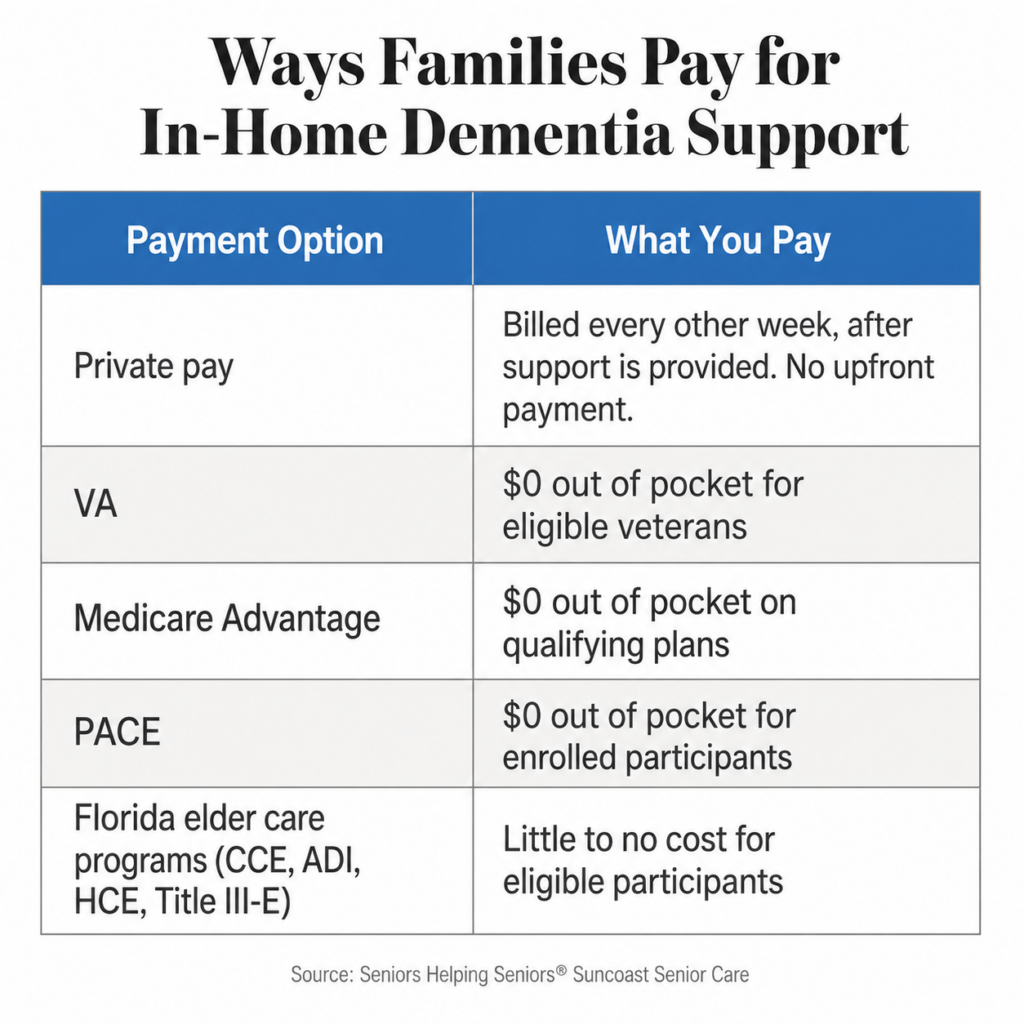
Private pay. We bill every other week for the previous two weeks of service. There is no upfront payment. You receive a bill after your parent has received support, not before. For detailed information about costs and paying for home care, visit our payment options page.
VA-funded support. For eligible veterans, the Veterans Administration covers the full cost of in-home dementia support services. The veteran pays zero out of pocket. The VA assesses the individual and authorizes a specific number of weekly hours, typically ranging from 4 to 20 hours per week.
Medicare Advantage. Clients enrolled in qualifying Medicare Advantage plans may receive support at zero out-of-pocket cost. We are contracted with Humana, UnitedHealthcare, Aetna, Longevity Health Plan, and Ultimate Health Plans, among others.
PACE (Program of All-Inclusive Care for the Elderly). For individuals enrolled in PACE, dementia support services are covered at zero out-of-pocket cost.
Florida Department of Elder Affairs programs. Seniors Helping Seniors is an approved provider for several state programs, including Community Care for the Elderly (CCE), the Alzheimer’s Disease Initiative (ADI), Home Care for the Elderly (HCE), and the Older Americans Act Title III-E caregiver support program. These programs cover support at little to no cost for eligible participants.
Being contracted with the VA, Medicare Advantage plans, PACE, and state elder-care programs is uncommon among home care agencies. Each program conducts its own credentialing and vetting process before approving a provider, so holding contracts across this full range reflects a level of quality that families can trust.
When Family Caregivers Need a Break
If you are the one providing most of your parent’s daily support, you already know what burnout feels like. Family caregiver support and respite care give you the chance to step away, whether for a few hours, a weekend, or a regular weekly schedule, knowing that your parent is with someone consistent, trained, and genuinely engaged.
Respite support is available around the clock, including overnight. For overnight visits, our caregivers stay awake throughout the shift to safely assist clients who may get up frequently or become disoriented at night.
How to Get Started
If your parent is showing signs of cognitive decline and you are trying to figure out the right next step, a short phone call is usually the best place to start. We will spend about 15 minutes understanding the situation, your parent’s needs, and what kind of support might help. There is no obligation to move forward.
If home care in Sarasota or home care in Bradenton is the right fit, we can typically have a nurse at the home for an assessment within 24 to 48 hours, and support can begin within days.
Seniors Helping Seniors Suncoast, 6901 Professional Pky E, Suite 266, Sarasota, FL 34240, 941-877-1000
Most families start with a short 10 to 15 minute call to talk through the situation and see whether dementia support services in Sarasota are the right fit, with no obligation to move forward.
Each office is independently owned and operated. © 2026 Corporate Mutual Resources Incorporated.